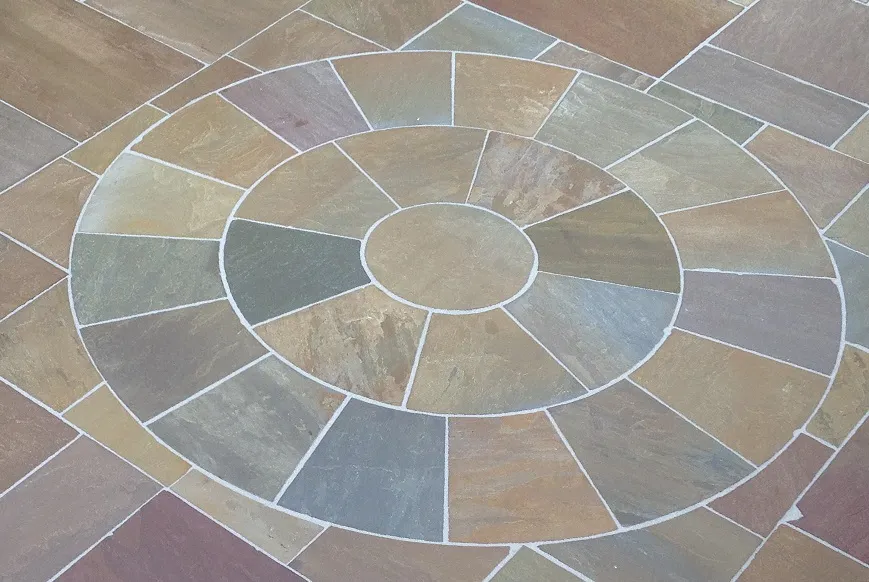
Circular Sandstone Paving in the UK: A Complete Guide to Stunning Garden Features
A well-designed garden is all about flow, balance and focal points. If you want a feature that instantly elevates an outdoor space, Circular Sandstone Paving in the UK is one of the most effective design choices you can make. Stone circles create a natural centrepiece for patios, seating areas and fire pit zones, while still feeling timeless and practical for everyday use. With the right colour choice, installation and aftercare, a circular feature can make even a small garden feel more structured and intentional.
At UK Stone Imports Ltd, established in 2007 and based in Hersden, Canterbury, Kent, we supply quality Porcelain and Natural Stone from around the world. Our ranges are selected to help homeowners and landscapers create outdoor spaces that look fantastic and perform well in British conditions.
Circular Sandstone Paving in the UK: Why circles transform outdoor spaces
Circles work because they draw the eye. In garden design, straight lines are great for structure, but a curved feature adds contrast and softness. Circular sandstone paving can create a visual anchor that guides the rest of the layout, whether that’s a pathway leading to the centre, borders that frame the feature, or planting that wraps around it.
Circular Sandstone Paving in the UK is especially popular for seating areas. A circle naturally suggests a social space, which makes it ideal for placing a table and chairs, a bistro set, or a fire pit with surrounding seating. It can also be used as a statement feature in the centre of a lawn, in a courtyard garden, or at the end of a path where you want a clear destination.
Another benefit is flexibility. A circle can define a new “zone” within a larger garden, helping you separate dining from lounging, or a play area from planting beds. And because sandstone is a natural stone with distinctive grain patterns and textures, the finished look has depth and character rather than feeling flat or uniform.
Choosing colours, tones and patterns for a circle feature
Sandstone is available in a variety of colours, including browns, greys and yellows, which makes it easier to match your circle feature to the rest of your paving or your home’s exterior. Warm tones can create a classic, welcoming feel that suits traditional gardens. Greys can look sharper and more contemporary, especially when paired with modern fencing, clean edging and minimal planting.
When planning a circle, consider what surrounds it. If you have an existing patio, you can use a circle as a contrasting centrepiece by choosing a different tone, or you can match it closely for a seamless look. Many people also like to frame the circle with setts to create a crisp border and make the feature stand out. Setts are also useful for defining boundaries between lawn and paving, which can improve both the design and long-term tidiness.
Pattern matters too. Circular paving is typically laid in rings that radiate from the centre, creating a natural sense of movement. This works particularly well when your garden has straight paths or rectangular lawn areas, because the contrast adds interest without cluttering the overall layout.
A simple way to choose confidently is to view stone samples in natural daylight. Colour variation is part of what makes sandstone attractive, so seeing it outside helps you understand the final effect before committing.
Circular Sandstone Paving in the UK: Best locations for patios, paths and focal points
Where you position a circle can make all the difference. For many gardens, the best location is where you already spend time, such as just outside the back doors or next to a kitchen-diner opening. This creates a natural transition from indoor living to outdoor dining.
Circular Sandstone Paving in the UK also works brilliantly at the end of a path. A winding route that leads to a circular feature creates a sense of discovery, and it can make a long garden feel more engaging. In smaller gardens, a circle can sit within a square patio area as a centrepiece, giving the impression of a more complex design without needing a huge footprint.
If you want a fire pit area, a circle is a natural fit. It defines the space, encourages seating in a sociable layout, and helps the feature look “built-in” rather than added on. You can also place a circle around a garden sculpture, water feature, or a tree, using the paving to frame and highlight the focal point.
For sloped gardens, circles can still work, but you may need steps or terracing. In those cases, sandstone pairs well with other paving features, and setts can be used to create clean edging and safe transitions.
Circular Sandstone Paving in the UK: Installation tips for a clean, long-lasting finish
A circle feature looks best when the groundwork is right. The first step is always a stable sub-base that is compacted properly, with drainage considered from the start. British weather makes drainage essential, because pooling water can lead to staining, joint breakdown and movement over time.
Accuracy is also important. A circle needs careful setting out so the rings align cleanly, the centre point is true, and the joints remain consistent. This is where experienced installers add real value, especially when working around existing patios, paths or raised borders.
Jointing should be chosen with longevity in mind. Weather-resistant jointing can help reduce weed growth and make the area easier to maintain. If your circle sits in a high-use area, such as a dining patio, strong jointing can also reduce the risk of wash-out during heavy rain.
Once installed, small details complete the look. A neat border using setts can frame the circle and strengthen the visual impact. If your circle transitions into straight paving, a tidy edge line helps it feel intentional rather than awkwardly “joined on”.
Maintenance and aftercare for circular sandstone features
Sandstone is durable and long-lasting, but like any natural stone, it benefits from sensible care. Regular sweeping helps prevent organic debris building up, especially around joints and borders. A light wash when needed can lift surface dirt and keep colours looking fresh.
If your circle sits under trees, clear leaves promptly to reduce staining. In shaded areas, keep an eye out for moss or algae, particularly in damp seasons. With routine upkeep, a sandstone circle will continue to look great year after year.
Sealing is a personal choice. Some homeowners like sandstone to weather naturally, while others prefer added protection, particularly in dining areas. If you’re unsure, it’s worth discussing options before installation so the aftercare suits both your lifestyle and the look you want.
Why UK Stone Imports is a trusted choice for quality stone
At UK Stone Imports, we only import the finest quality materials because our reputation relies on consistent standards. With a wide range of Porcelain, Sandstone, Limestone, Slate and complementary products, we help customers create outdoor spaces that feel premium and perform well.
Samples are available across our ranges, because seeing and feeling the stone before you buy makes choosing far easier. If you’re planning a new feature, get in touch with our team in Hersden, Canterbury, Kent, and explore our selection to bring your design to life.