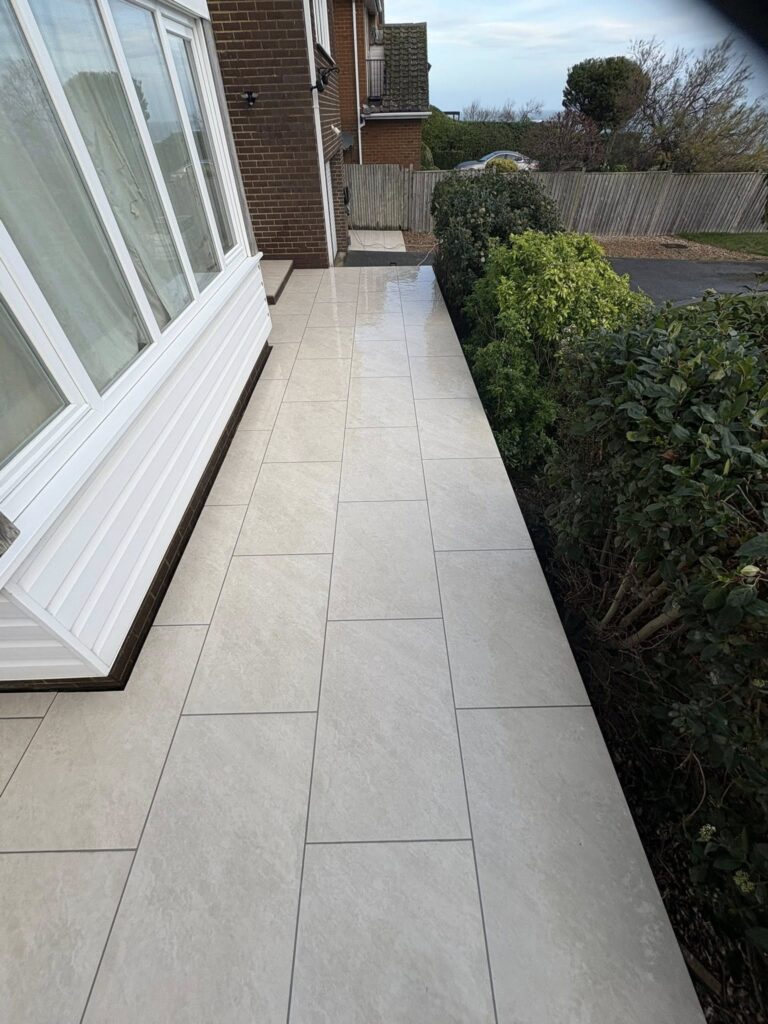
Stone paving in Thanet can transform a garden, front entrance, or outdoor seating area, but coastal conditions make smart material choices even more important. Wind-driven rain, salt in the air, and shaded corners can all influence how paving looks and performs over time.
This guide covers how to choose the right natural stone, plan the installation, and keep your paving looking sharp in a coastal setting.
Quick answer: what stone is best for Thanet?
For many Thanet patios, calibrated sandstone or limestone provides a great balance of grip, style and value. For high-wear areas and edging, granite setts are an excellent durability upgrade. The best choice also depends on exposure, shade and how you use the space.
Why the Thanet environment matters
Thanet’s coastal influence can accelerate:
- Surface salt residue and general weathering
- Organic growth in damp or shaded areas
- Sand and debris accumulation (especially near exposed gardens)
- Faster drying in windy areas, which can affect some jointing approaches
None of this rules out natural stone. It simply means you should choose finishes and maintenance routines that suit your setting.
The best stone options for Thanet paving projects
Sandstone
A favourite for patios because it offers natural variation and a comfortable texture underfoot. A riven finish can provide extra grip and suits traditional and relaxed garden styles. Calibrated sandstone can help achieve clean levels and crisp lines.
Limestone
Often chosen for a refined, modern look. It can work beautifully with contemporary landscaping and neat borders. In very shaded areas, consistent cleaning is helpful to minimise organic build-up, regardless of stone type.
Granite setts
Ideal for driveways, thresholds, pathways that take heavy wear, and as a border detail that holds paving patterns neatly. Granite also performs well in exposed, high-traffic zones.
Setts and edging details
Even if your main paving is sandstone or limestone, granite edging can protect the perimeter and add definition. It is a practical design move that often lifts the finished look.
Finish and format: what makes installation easier
In Thanet, you will often get the best results by balancing style and practicality:
- Calibrated slabs: more consistent laying and fewer level issues
- Mixed-size layouts: classic look that feels established
- Large-format slabs: modern appearance, fewer joints
- Textured finishes: helpful in exposed or wet-prone areas
For seating zones, think about furniture stability too. Very uneven textures can look natural but may cause wobble with small table legs.
Drainage and sub-base: the foundation of long-lasting paving
Most paving problems are not caused by the stone itself. They come from poor preparation.
Key points to get right:
- Sub-base depth and compaction matched to use (patio vs driveway)
- A suitable bedding layer
- Falls to manage surface water appropriately
- Edge restraints where movement or vehicle load is possible
If your garden is exposed, wind can drive rain into corners. Planning a sensible fall and avoiding low spots helps keep the surface clean and usable.
Maintenance tips for coastal paving in Thanet
To keep stone paving in Thanet looking its best:
- Sweep regularly to remove sand and debris
- Rinse down occasionally to prevent residue build-up
- Clean shaded zones before algae becomes established
- Consider sealing in dining areas for added stain resistance
- Use appropriate jointing methods to reduce weed growth
A simple routine beats intensive “once a year” cleaning. Light, regular maintenance keeps the surface consistent and reduces the risk of slippery patches.
Design ideas that suit Thanet homes and gardens
Stone paving can be used to create structure and shelter in coastal gardens.
Popular approaches:
- Defined seating zone with a contrasting border
- Stepping-stone style path with gravel joints for drainage
- Courtyard-style paving for wind protection and year-round use
- Granite sett detailing around entrances and driveway edges
If you are near the sea, consider slightly more forgiving colour blends, as they can hide everyday marks better than very pale, uniform finishes.
FAQs
Do I need to seal natural stone paving in Thanet?
Not always, but sealing can help with stain resistance and ease of cleaning, particularly in outdoor dining areas.
What helps prevent algae on paving near the coast?
Good drainage, sunlight exposure where possible, and regular light cleaning. The right finish and jointing also helps.
Is sandstone suitable for coastal patios?
Yes. Many coastal patios use sandstone successfully. Choose a finish that suits traction needs and keep on top of routine cleaning.
Can I combine different stones in one project?
Yes. Mixing paving with granite borders or setts is a common way to add definition and durability in high-wear areas.
Planning stone paving in Thanet?
If you are comparing materials for a patio, path or driveway, UK Stone Imports can help you choose stone that suits coastal conditions, installation needs and the style you want to achieve.